
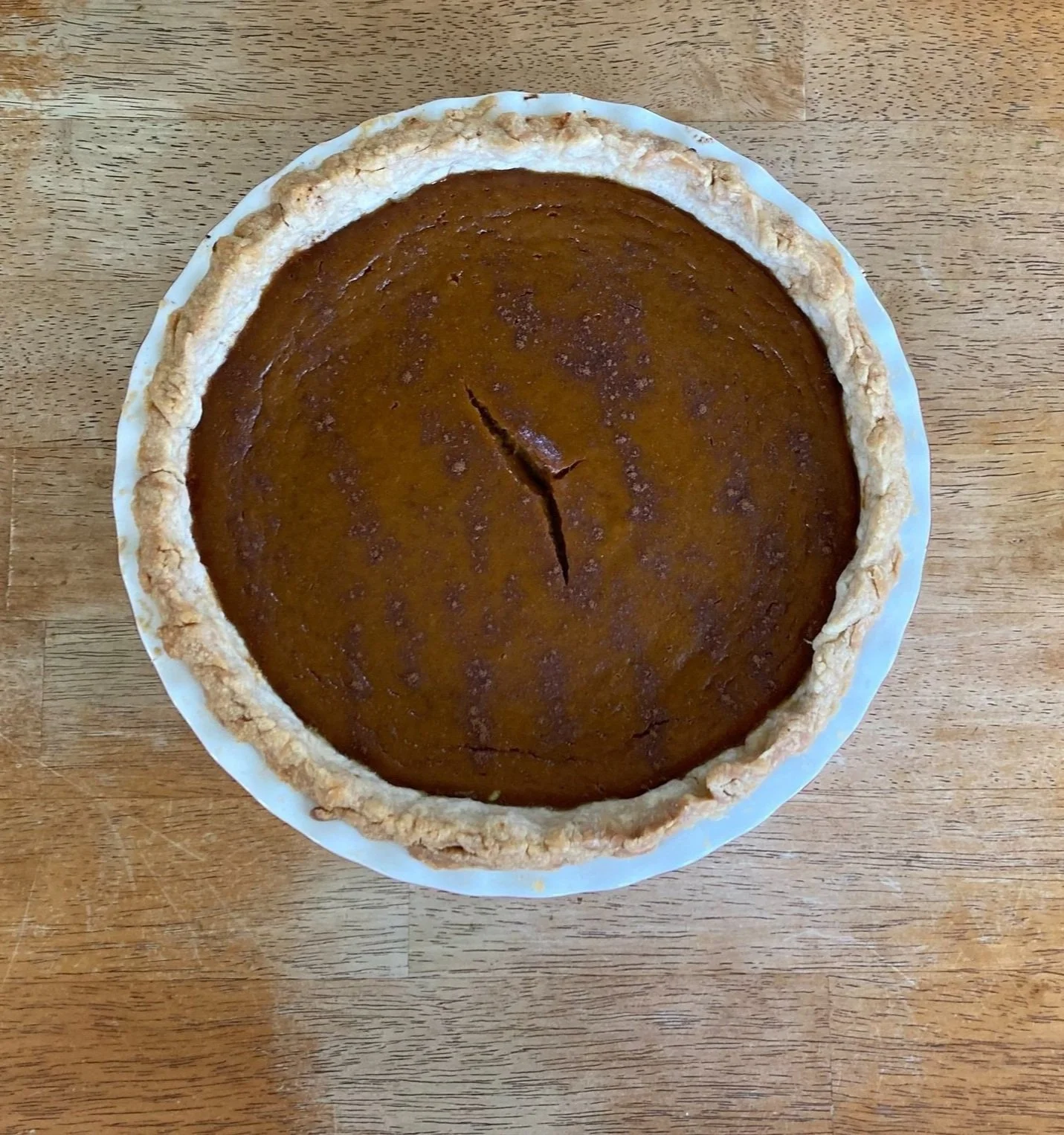
What is lard?
Lard is rendered pig fat. Basically, you cut the fatback into small pieces and cook slowly until the fat melts, you strain out the meat bits and are left with pure natural fat. We are so very grateful that our butcher does this for us! Typically lard can be stored at room temperature, however we like to store it in the fridge for optimum freshness. Plus, it’s still easy to scoop out to cook or bake with. Lard made from fatback tends to have a slight porky flavor which I love for most dishes.
My favorite ways to use lard are:
-
sautéing veggies, I just sub lard for cooking oil
-
roasting veggies, I either massage into my veggies or melt first and drizzle
-
searing pork chops or steaks – I add just a bit of lard to the pan to coat
-
cooking eggs
-
making savory pie crusts (recipe here)
Lard has a high smoke point (unlike olive oil) so it’s ideal for frying, broiling or grilling. Plus, because it’s a natural source of fat, lard has some pretty great health benefits as opposed to super processed fats. You can read more about that here.
You can also make soap with lard which is super gentle and moisturizing. We offer some amazing options from our farm!
When you get lard from our farm, it’s frozen in quart containers. Once thawed in the fridge, it should last 6 months to a year.
What is leaf lard?
Leaf lard is made the same way but from the fat around the kidneys of a pig. Since this fat isn’t in the muscle meat of the pig, it has a much more neutral flavor, not porky at all, making it great for dessert pie crusts, pastries, etc. You can use leaf lard just as you would coconut oil, but with a less tropical taste which I love!
Some of my favorite ways to use leaf lard are:
-
pie crusts for pumpkin pie, chocolate pie, basically any sweet pie (recipe here)
-
chocolate chip cookies (recipe here)
-
roasting potatoes – I simply chop into bite sized pieces, line a cookie sheet with parchment paper, melt 2-3 T lard and drizzle over potatoes with salt and pepper, roast at 400 degrees for 25-30 minutes
-
zucchini bread – I just sub half the fat with leaf lard
I am also super interested in making some moisturizers and candles with leaf lard since it doesn’t have much of a scent, I’ll be excited to share how this goes.
Let us know some of your favorite ways to cook with or use lard or leaf lard. I’m always looking for new ideas!
Cakes made with Almond Flour and Monk fruit to sweeten the cake instead of sugar. It is a combination that makes a good keto desert. Not supposed to rot your teeth, make you fat or raise glucose levels. Adding carrots or something makes the cake moist.
I love this Sandy, thank you for sharing!
Hi! I just finished my first batch of whipped tallow balm, loved the process ( little scary and gross at some points) but so cool! I’m curious about leaf fat, is this good for making skin care? There are definitely some others who feel very much not. Please share what you know, thank you in be advance.
Hi! I’m so sorry I’m just now replying, I somehow missed this last year. Yes! The leaf fat is the best for skincare. I’ve made balms with it and have loved it :)
I’ve been rendering pure leaf fat for years.
I line bread pans with it, use as frying fat for beef and eggs too. Bread crusts are lighter.
It’s never gone bad in the frig either.
Cracklings, from back fat, make great bread sticks.
1 tblspn butter 7g saturated fat
1 tblspn leaf lard 4.7g saturated fat.
I love this! Such great uses for lard! And good to know on the saturated fat content, I had no idea!
I have been using leaf lard as a skin moisturizer for some time. I have never had problem skin but it does tend to be sensitive to chemicals and a little on the dry side because I live on a dry climate. My skin looks and feels great. It is plump, even-toned and soft. I do not have wrinkles, sagging skin or eye circles/bags.
I buy my leaf lard from a local health food store. I break off a portion that I slow melt in a double boiler and infuse with dry goji berries, dry hawthorn berries and astragalus root. (if interested in these additives, you can search their benefits for skin on the Internet.) I let it simmer for a few hours, strain it through a very fine strainer into a small glass jar and use it both morning and evening. A small amount gies a long way. I keep the rest in the fridge until I need to refill the bathroom jar.
Amazing! I’ll need to research those ingredients, I know goji berries have SO many benefits. Thanks for sharing!